CoinSpider
Methodology 2
The AI Brain's Review Council: Why We Ask the AI Four Times, From Four Opposing Roles
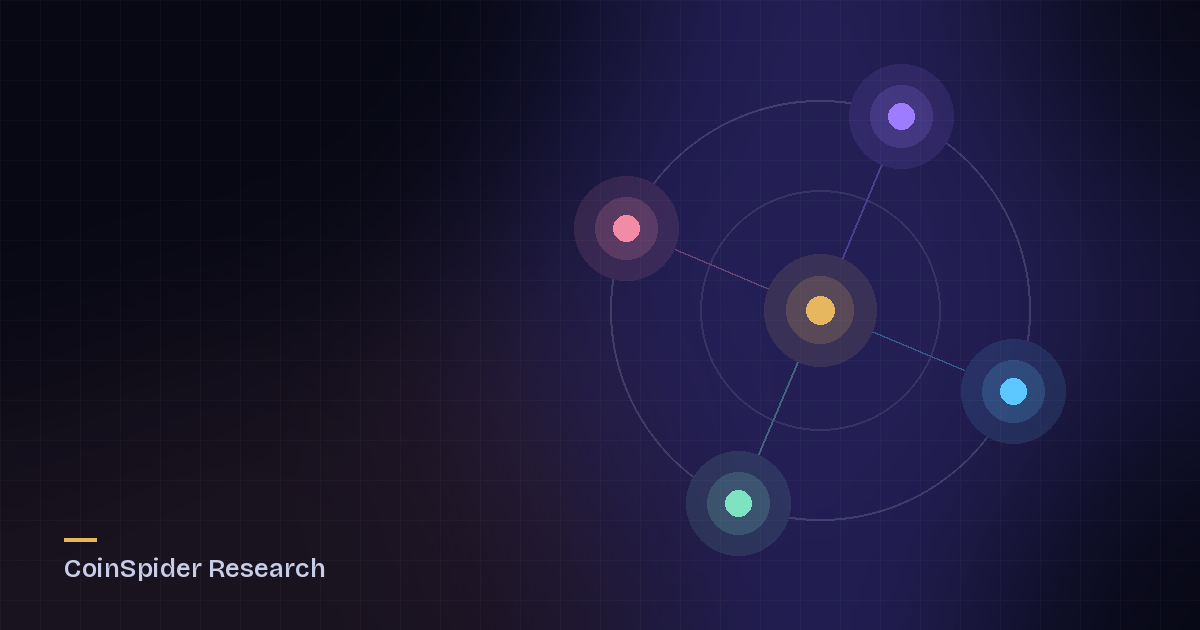
When an AI judges a coin in a single pass, the usual problem is not a lack of intelligence but a lack of pushback. CoinSpider's review council has the AI play four roles with different jobs: a fundamentals analyst, a skeptic, a technicals reviewer and a risk officer. Each role is a separate call that reads the same evidence and independently gives a stance, a confidence level and its reasons. The system then counts votes according to the risk level you choose, and the risk officer can veto any trade on a red flag. This paper explains the motivation, the process and the limits of the design.
Key points- Four roles examine the same evidence from different directions, reducing single-viewpoint blind spots
- Every reason is required to name its evidence; a red-flag veto must cite specific evidence or it does not count
- Your risk level sets how much agreement is needed, but the red-flag veto can never be switched off
The blind spots of asking once
Large language models are good at synthesizing information, but they have two typical weaknesses when asked to make investment calls. They are easily swayed by how material is written, so an upbeat project description tends to produce an upbeat conclusion. And they have no built-in urge to argue the other side, so they rarely go looking for evidence that would prove them wrong.
Investment firms solve this with an investment committee: someone proposes, someone else is paid to find holes, someone reads the charts, someone owns risk, and a vote decides. CoinSpider brings the same structure to AI. We call it the review council, and it is the last gate before the AI Brain decides to buy.
Four roles, four questions
All four reviewers receive the same evidence pack: price and volume data, project material, tokenomics, on-chain flows, price gaps and volume moves on other exchanges relative to Binance, and relevant announcements. What differs is the question each must answer:
- Fundamentals analyst: what does the project actually do? Is its sector one that money is paying attention to? Are the product, development and backers real? Is there a clear catalyst in the coming months?
- Skeptic: is there a fatal reason it could go to zero or keep bleeding — abandoned development, a vanished team, large unlocks, concentrated holdings, wash trading, delisting risk? Falling a long way does not make something cheap.
- Technicals: reading the daily chart only, has it stopped falling and started to build a base, or is it still in a downtrend?
- Risk officer: what is the worst case, including circulating supply, unlock pressure, delisting risk and whether the project is still operating? Only this role holds the red-flag veto.
Each reviewer must return three things: a stance (buy, hold or avoid), a confidence level between 0 and 1, and its reasons. We require every reason to say which item in the evidence pack it relies on. Anything that cannot be found goes on a separate list of unknowns rather than being guessed.
Voting and veto
Once the four verdicts are in, votes are counted according to the risk level you picked in the app. Strict requires more reviewers to agree with higher confidence; Aggressive sets a lower bar. The three levels only change how much agreement is required — the reviewers and the evidence are identical.
There is also a gate before the count. If the risk officer finds a red flag in the evidence — a delisting announcement or Monitoring tag, a large upcoming unlock, a stalled project, fraud or an unresolved hack — and cites the specific evidence, the trade is vetoed no matter how keen the other three reviewers are. A red flag without cited evidence does not count, which stops the model from vetoing on a hunch.
The red-flag veto cannot be turned off at any risk level. That is a deliberate trade-off: in small caps, missing one opportunity usually costs far less than stepping on one fatal problem.
Why we keep the whole record
Every stance, confidence level, reason and cited piece of evidence is stored. On the Leads page of the app you can see why each coin was bought or rejected. This serves two purposes: you can judge whether the AI's reasoning holds up, and we can look back over time at which reasons matched what happened next and keep calibrating the review.
The daily research log publishes the stance distribution of the past 24 hours — how many buy, hold and avoid votes each reviewer cast and how many cases were vetoed on red flags. Disagreement is information in itself: when the skeptic and the fundamentals analyst disagree, the coin is usually more uncertain.
Limitations
A multi-role review reduces single-viewpoint bias, not risk as a whole. The four reviewers share one evidence pack, so if that evidence is missing or stale they can be wrong together. That is why unknowns are recorded separately and why the public track record keeps publishing live results, losing trades included.
One more caveat: if a reviewer's AI call fails, that vote falls back to local rules and the review record notes that the AI was temporarily unavailable. Rule-based votes never raise red flags, so whenever the risk officer's vote did not come from the AI, that review cannot trigger a buy, and the engine reviews the coin again on the next scan. If another reviewer's AI call fails, the votes are counted as usual.